
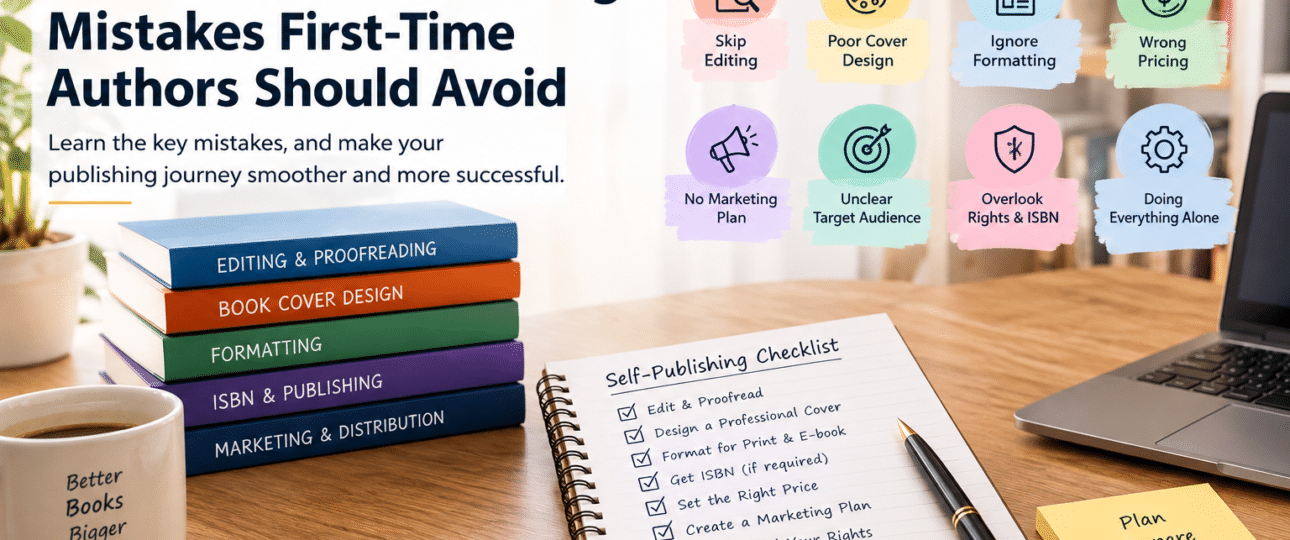
Self-publishing gives would-be authors a new way of publishing. It's now simple to convert your manuscript into a finished book without getting a publisher to accept it. Instead, you can choose to edit, format, publish, and distribute your book yourself.
But the very power you have in your publishing is the very burden you will also have in all that you have to decide.
First-time authors often fall into the trap of simply concentrating on writing their book and, believing it to be the end of it, forgetting everything that follows. Publishing a book isn't simply about uploading your file to a website. Your book needs editing, designing, formatting, pricing, distribution, and a plan for marketing.
In this guide, we'll talk about the common self-publishing mistakes first-time authors should avoid and what you can do instead to make your publishing journey smoother and more professional.
Finishing your manuscript is only the beginning. A successful self-publishing journey requires careful decisions about editing, design, formatting, publishing, pricing, distribution, and marketing.
1. Publishing the Manuscript Without Professional Editing
The biggest mistake most new writers make is thinking that just because their manuscript is finished, it is automatically a publishable manuscript.
It is possible to reread your book 20+ times and still find continuous errors in grammar, inconsistency, repetition, awkward language, structure, or concepts that were not clearly developed. When authors are deeply attached to their work, some problems can be difficult to identify on their own.
Why Professional Editing Matters
A professional book editor can review the manuscript and identify flaws that an author may not notice because of their familiarity with the book.
Depending on the book, editing may include:
- Developmental editing.
- Line editing.
- Copy editing.
- Grammar and spelling correction.
- Fact-checking.
- Proofreading.
What You Should Do
Before publishing, have professional editors review your book. Professional editing and proofreading can make your work easier to read, more consistent, more believable, and more enjoyable for the reader.
Final Tip: Completing your manuscript does not mean you're done with the book.
2. Creating a Book Cover on Your Own Without Knowing Your Readers
Your book cover is often the first thing that a reader sees. Some first-time writers attempt to create their own covers with cheap templates to save money. Although some DIY covers can work, an unprofessional cover can give the impression that the book itself is unprofessional.
Your cover should communicate:
- Book genre.
- Subject.
- Tone.
- Target audience.
- Author identity.
Your Book Cover Should Work Online Too
Most readers discover books today by searching online, which means how your cover looks as a small thumbnail is important.
The same visual style does not need to be used for a romance novel, academic textbook, business book, children's book, and poetry book. Your design should match the expectations of your genre and the readers you want to reach.
What You Should Do:
Choose a professional cover suited to your genre and readers. Adhipati Creations provides book cover design and formatting support to help authors create a more professional presentation for their books.
3. Ignoring Professional Book Formatting
Another common mistake is considering formatting a minor concern. A document that appears perfectly fine in a Microsoft Word file might look unprofessional in the print version of the book or in an ebook.
Formatting involves elements such as:
- Page size.
- Margins.
- Fonts.
- Chapter headings.
- Paragraph spacing.
- Page numbers.
- Headers and footers.
- Table of contents.
- Images and illustrations.
- Tables and charts.
In the case of a book or educational book, the layout may become more complicated because the manuscript can contain symbols, diagrams, references, tables, and other specific elements.
What You Should Do
Indicate if you want one file for the print edition and another for the online editions. Always review the final proof before publishing.
You can also learn more about what book formatting is and why it is important in publishing.
4. Choosing the Wrong Publishing Platform
No publishing company or platform is the perfect fit for every author. Some writers select a platform simply because it is more famous than others instead of considering their own publishing goals.
Before selecting a platform, consider:
- Where your target readers are located.
- Print vs ebook requirements.
- Distribution options.
- Royalty structure.
- ISBN requirements.
- Pricing flexibility.
- International availability.
- Rights and ownership.
What You Should Do
Research the platform before uploading your book. A publishing option must suit your book, your audience, your budget, and your long-term plans—not simply what other writers are doing.
If you are looking for professional support throughout the publishing journey, explore Adhipati Creations' self-publishing services.
5. Not Understanding ISBN Requirements
ISBN is a crucial element of professional book publishing. ISBN stands for International Standard Book Number and identifies a particular edition of a particular book. It also provides an easy way for booksellers, libraries, and distributors to identify a published book edition.
However, first-time authors often misunderstand:
- When an ISBN is required.
- Who should own the ISBN.
- Whether different formats need different ISBNs.
- How ISBN registration works.
- The difference between ISBN and other identifiers.
Adhipati Creations has detailed resources regarding ISBN registration, ISBN requirements, and the difference between free and paid ISBNs.
For a detailed explanation, read our guide on what an ISBN is and why authors need it and our complete guide to ISBN registration in India.
What You Should Do
Know your ISBN needs before you publish, not after you start distributing.
Good publishing decisions are made before the book goes live—not after problems appear.
6. Setting the Book Price Randomly
First-time authors also tend to get their book pricing wrong. Some authors set the price very low assuming that a lower price will automatically create more sales. Others set the price very high without considering their target readers or comparable books.
Your pricing can depend on:
- Book length.
- Genre.
- Target audience.
- Printing cost.
- Format.
- Competitor pricing.
- Distribution channel.
- Author positioning.
- Desired royalty.
What You Should Do
Research comparable books before deciding your price. Review books within your genre, format, category, and target market.
Aim to find a price that feels right for the reader while still fitting the economics of publishing.
7. Believing Publishing the Book Guarantees People Will Discover It
Avoiding this mistake is crucial for new writers. Publishing is not the end. That's when the marketing process begins.
You can write a fantastic book and design it beautifully, but you'll still need to persuade readers to find it.
What Can You Do?
Put together an essential book marketing plan that could contain:
- Author website.
- Social media.
- Email marketing.
- Book launch campaigns.
- Author branding.
- Reader communities.
- Online advertising.
- Reviews and reader feedback.
- Content marketing.
Simply publishing doesn't mean that your book will sell. Authors should consider marketing and readership strategies as an important part of the publishing process.
Adhipati Creations offers book marketing and promotion services to help authors work on visibility and reach potential readers.
8. Failing to Research the Target Audience
A book has to be written and marketed with the target audience in mind. New writers sometimes try to play it safe, but this can make the positioning of a book unclear.
Before publishing, ask:
- Who is this book for?
- What problem does it solve?
- What type of reader would buy it?
- What other books does this audience read?
- Where does this audience discover books?
- What makes my book different?
What You Should Do
Identify who you are trying to reach before you decide on your marketing and positioning.
Understanding your readers can help you make better decisions about your title, cover, description, keywords, pricing, and promotion.
9. Neglecting the Book Description and Metadata
The online listing of your book is also a very important part of the publication process. A potential reader may see your book's title, cover, description, author name, categories, keywords, format, and price even before they've turned a single page.
A poorly written or incomplete listing may make it harder for readers to understand what you're trying to persuade them to buy.
What You Should Do
Write a clear and reader-focused book description. Your description should communicate:
- What the book is about.
- Who it is for.
- What readers can expect.
- What makes it valuable.
Make sure you also choose appropriate categories and keywords when posting through online sources.
10. Not Checking the Final Proof
Imagine publishing your book and then discovering that a chapter heading is incorrect, pages are missing, images are misplaced, page numbers are wrong, or typographical errors remain in the final publication.
Problems such as these can ruin the professional look of your publication. A table of contents that does not match the chapters can also create a poor reader experience.
Before publishing, always double-check the final proof.
- For printed books, review the actual proof if you possibly can.
- For ebooks, test the digital version on various devices.
- Check chapter headings, page numbers, images, tables, and the table of contents.
- Perform one final quality-control check before publication.
One last quality-control check can eliminate costly revisions further down the road.
11. Investing Excessively in Services That Don't Drive Outcomes
Self-publishing comes at a cost, but investing more in your book does not necessarily mean it will be a better book.
First-time writers might be tempted to buy services they don't need or overspend on marketing services for a book that is not yet ready.
Build Your Publishing Budget Around Priorities
Your budget may include:
- Editing.
- Proofreading.
- Cover design.
- Formatting.
- ISBN.
- Printing.
- Distribution.
- Marketing.
- Advertising.
The correct budget is based on your manuscript, publishing medium, audience, and intention. Publishing expenses can differ based on the chosen way of publishing and the type of professional services needed.
Authors can review available self-publishing plans and pricing before deciding which services are relevant to their publishing goals.
12. Not Understanding Rights and Ownership
Know what rights you are giving up before signing up with a publishing platform or service.
Pay attention when reading the agreement and keep an eye out for:
- Copyright ownership.
- Publishing rights.
- Distribution rights.
- Territory.
- Contract duration.
- Royalties.
- Termination clauses.
- Adaptation rights.
What You Should Do
Never agree to terms you don't understand. If you are in doubt about a significant legal term, consider getting appropriate legal advice before signing.
Knowing your rights can help you make better long-term decisions if you intend to build a published career.
13. Trying to Do Everything Alone
Self-publishing means you are responsible for your publishing journey. That doesn't mean you have to do all the work yourself.
Writing, editing, cover design, formatting, distribution, marketing, and publishing all require different skills.
Inadequate time management when trying to do everything alone may lead to:
- Delayed publication.
- Poor formatting.
- Editing mistakes.
- Weak design.
- Inconsistent marketing.
- Author burnout.
What You Should Do
Prioritize the areas you are knowledgeable in and utilize experts where necessary. A professional publishing partner can help coordinate different parts of the process while you remain involved in the key decisions.
Self-Publishing Mistakes Checklist
Before publishing your book, ask yourself:
- Has my manuscript been professionally edited?
- Has the book been proofread?
- Is the cover professionally designed?
- Has the interior been properly formatted?
- Have I checked the final proof?
- Do I understand my ISBN requirements?
- Could I have chosen more suitable publishing and distribution outlets?
- Have I researched competing books?
- Is my pricing strategy clear?
- Have I identified my target readers?
- Is my book description optimized?
- Do I have a marketing plan?
- Have I reviewed my publishing agreement?
- Do I understand my rights and royalties?
If you can answer "Yes" to these questions, you are far more ready to take your manuscript to book status.
Self-publishing gives you control, but professional preparation helps you use that control wisely.
How Adhipati Creations Can Help First-Time Authors
Self-publishing may be an exciting prospect, but the complexities of the process can also be daunting.
Adhipati Creations provides end-to-end publishing support, including:
- Professional editing and proofreading.
- Book cover design.
- Book formatting.
- ISBN assistance.
- Print and ebook publishing.
- Distribution support.
- Publishing consultation.
- Marketing guidance.
The self-publishing program offers authors the opportunity to take their manuscript from preparation to print with professional support throughout the process.
Whether you're writing a novel, poetry anthology, scholarly book, textbook, business book, or self-help book, the right professional support can help you steer clear of common publishing pitfalls.
Final Thoughts
Self-publishing is great because it puts the author in the driving seat, but that seat comes with responsibility.
Sometimes, the biggest mistakes don't even involve writing the book. They're made during editing, design, formatting, publishing, pricing, distribution, or marketing.
After you finish writing, complete important pre-publication tasks, including preparing your manuscript, analysing your audience, deciding where to publish, checking your published book, and developing a marketing plan.
Publishing a book is not a one-time event. It's a process. A well-designed and professionally prepared book can give readers a more powerful experience and help you establish your author brand.
Whether you are preparing to turn your manuscript into a tangible book for distribution or are looking for support with individual publishing stages, Adhipati Creations can help you throughout the publishing journey.
Your manuscript deserves more than publication. It deserves a publishing process that prepares it for readers.
Frequently Asked Questions About Self-Publishing Mistakes
1. What are common self-publishing mistakes made by beginning authors?
Common mistakes include not hiring a professional editor, not investing in a good cover design, not formatting the book correctly, publishing on the wrong platform, setting the price too high or too low, and publishing without a marketing plan.
2. Is professional editing necessary for self-publishing?
Yes. Many authors use professional editing to catch issues with grammar, spelling, structure, consistency, and readability that they may have missed during their own review.
3. What are the costs involved in self-publishing a book?
Self-publishing costs differ based on the services you choose. They may include editing, proofreading, cover design, formatting, printing, ISBN, distribution, marketing, and advertising.
4. Should I have an ISBN for my self-published book?
ISBN requirements can depend on the book format and distribution method. Authors should understand their ISBN requirements before the release of the book. You can learn more through our ISBN registration guide.
5. Will I be able to customize my book cover when publishing on my own?
Yes. Authors can customize their book covers, but professional cover design is generally preferable because the cover can affect how readers perceive the book, especially in online markets.
Related Resources
- Editing & Proofreading Services
- Book Cover Design & Formatting Services
- What Is Book Formatting and Why Is It Important?
- What Is an ISBN and Why Do Authors Need It?
- Complete Guide to ISBN Registration in India
- Free ISBN vs Paid ISBN: Which One Should You Choose?
- Book Marketing & Promotion Services
- Complete Self Publishing Services
- Self Publishing Plans & Pricing
- Book Cover Design Mistakes Authors Should Avoid
''' path = "/mnt/data/common-self-publishing-mistakes-first-time-authors.html" with open(path, "w", encoding="utf-8") as f: f.write(html) print(path)