Publishing a book is not just about writing great content—it’s also about presenting that content in a way that looks professional, readable, and appealing. This is where book formatting plays a crucial role. Whether you are a first-time author or an experienced publisher, understanding book formatting can make the difference between a polished book and one that readers struggle to engage with.
In this detailed guide, we will explore what book formatting is, its importance, differences between print and ebook formatting, and how it impacts reader experience and publishing platforms.
What Is Book Formatting?
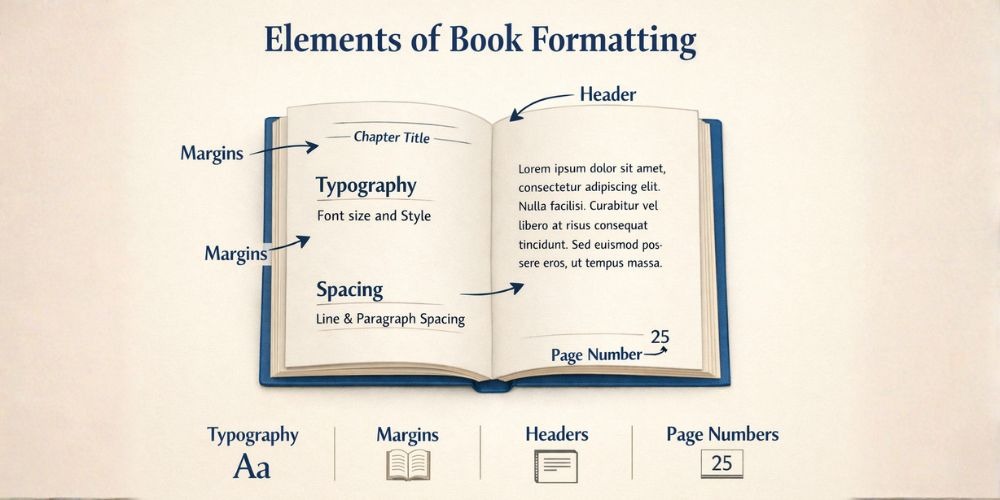
Book formatting refers to the process of arranging and styling the content of a book to make it visually appealing and easy to read. It includes elements like:
- Font type and size
- Line spacing
- Margins
- Paragraph alignment
- Chapter headings
- Page numbers
- Headers and footers
In simple terms, if writing is the content, formatting is the presentation.
When someone asks, “what is book formatting?”, the easiest way to understand it is this: it’s the final design layer that transforms a manuscript into a professional-looking book.
Why Is Book Formatting Important?
1. Creates a Professional Impression
Readers judge books not just by their content but also by how they look. Poor formatting can make even excellent writing appear unprofessional. A well-formatted book builds credibility, attracts readers, and reflects seriousness as an author. This is a common focus in our blog articles for authors.
2. Improves Readability
Formatting directly affects how easily a reader can consume your content. Good formatting ensures proper spacing between lines, easy-to-read fonts, and logical content structure. Bad formatting, on the other hand, can cause eye strain, confusion, and reader frustration.
3. Enhances Reader Experience
The reader experience is one of the most critical factors in publishing success. A well-formatted book keeps readers engaged and helps them follow the story smoothly. Imagine reading a book where text is cramped, margins are uneven, and paragraphs are inconsistent; most readers would stop reading quickly.
4. Meets Publishing Platform Guidelines
Different publishing platforms have strict formatting rules. For example, Kindle requires specific ebook formatting standards, while print platforms require precise margin and bleed settings. If your formatting doesn’t meet these guidelines, your book may get rejected or display incorrectly. This is why book formatting for self publishing is extremely important.
Print Book Formatting vs Ebook Formatting
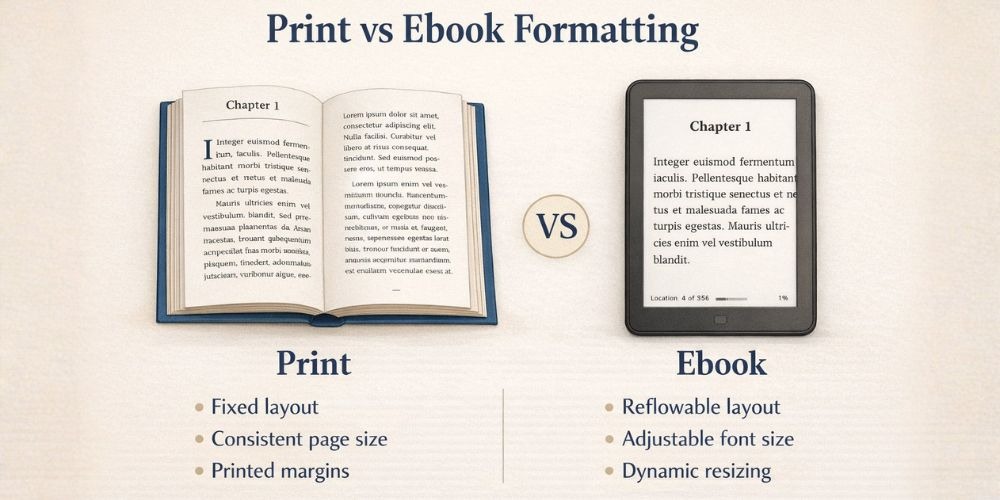
Understanding the difference between print book formatting and ebook formatting is essential.
Print Book Formatting
Print books are physical, so formatting must account for real-world printing constraints. Key Features: Fixed layout, Defined page size (e.g., A4, 6x9 inches), Margins and gutters for binding, Page numbers, Headers and footers. Requirements: Proper alignment for printing, Bleed settings for images, High-resolution files. Print formatting focuses on precision and consistency. Disha Publication books follow these precise standards.
Ebook Formatting
Ebooks are digital and adaptable to different screen sizes. Key Features: Reflowable text, Adjustable font size, No fixed page numbers, Responsive layout. Requirements: Compatibility with devices (Kindle, tablets, phones), Proper HTML/CSS structure, Clickable table of contents. Ebook formatting focuses on flexibility and adaptability.
Key Differences at a Glance
| Feature | Print Book Formatting | Ebook Formatting |
|---|---|---|
| Layout | Fixed | Flexible |
| Page Numbers | Required | Not fixed |
| Margins | Essential | Minimal |
| Fonts | Fixed | Adjustable |
| Design Focus | Physical readability | Screen readability |
Importance of Book Formatting for Self Publishing
Self-publishing has given authors complete control—but with that control comes responsibility. When you self-publish, you are responsible for writing, editing, designing, and formatting. Poor formatting is one of the biggest mistakes self-published authors make. Why It Matters: Competes with traditionally published books, Impacts reviews and ratings, Influences buying decisions. A professionally formatted book can increase sales, improve reader retention, and build your author brand like Arihant Books.
Role of Book Formatting Services
Not every author has the technical skills to format a book properly. This is where book formatting services come in. What Do Book Formatting Services Offer? Professional layout design, Ebook and print formatting, Platform-specific formatting, Error-free formatting, Typography expertise. Why Choose Book Formatting Services? Saves time, Ensures accuracy, Meets publishing standards, Improves book quality. If you're serious about publishing, investing in professional formatting is a smart decision.
Book Formatting Services in India
With the rise of self-publishing, book formatting services in India have grown significantly. Advantages: Cost-effective solutions, Skilled professionals, Knowledge of global publishing platforms, Custom formatting services. Many Indian service providers, including Adhipati Creations, offer: Ebook formatting, Print formatting, Kindle formatting, InDesign layout services. This makes it easier for authors worldwide to get high-quality formatting at affordable prices.
Key Elements of Good Book Formatting
To ensure professional results, focus on the following elements:
- 1. Typography: Use readable fonts (e.g., Times New Roman, Garamond) and maintain consistent font sizes.
- 2. Spacing: Proper line spacing (usually 1.15–1.5) and adequate paragraph spacing.
- 3. Margins: Balanced margins and extra space for binding (gutter).
- 4. Alignment: Justified text for print and left-aligned for ebooks.
- 5. Chapters and Headings: Clear chapter breaks and consistent heading styles.
- 6. Page Numbers: Required for print books and placed consistently.
Common Book Formatting Mistakes
Avoid these common mistakes: Inconsistent fonts, Improper margins, No page breaks between chapters, Incorrect indentation, Overuse of bold/italics, Poor image placement. These mistakes can ruin reader experience and reduce credibility, as noted by other authors.
How Book Formatting Impacts Sales
Formatting may seem like a minor detail, but it directly affects sales. Here’s How: Professional look increases trust, Better readability keeps readers engaged, Positive reviews improve visibility, Reduces refund rates. A poorly formatted book can lead to negative reviews, low ratings, and poor sales. For legal distribution requirements, check our ISBN & distribution services. View our plan and pricing for specialized formatting options.
Tools Used for Book Formatting
Some popular tools include Microsoft Word, Adobe InDesign, Scrivener, Vellum (for Mac users), and Calibre (for ebooks). Each tool has its own strengths depending on your needs. This structure is essential for school books, class 11, and class 12 academic materials.
Should You Format Your Book Yourself?
DIY Formatting Pros: Cost-effective, Full control. Cons: Time-consuming, Requires technical skills, Risk of errors. Professional Formatting Pros: High-quality results, Saves time, Meets platform standards. Cons: Costs money. For serious authors, professional formatting is usually worth the investment.
“Book formatting is the final design layer that transforms a manuscript into a professional-looking book.”
Conclusion
Book formatting is a crucial step in the publishing process that should never be ignored. It transforms your manuscript into a professional, readable, and engaging book. Whether you’re working on ebook formatting or print book formatting, the goal remains the same: to provide the best possible reading experience. Investing in proper formatting—or hiring professional book formatting services—can significantly improve your book’s success. If you’re planning book formatting for self publishing, remember: great content deserves great presentation. At Adhipati Creations, we are committed to this excellence.
✔ Ready to turn your manuscript into a professional book?
Don't get lost in the confusion of the publishing world. Check our plan and pricing and contact Adhipati Creations today for a free consultation.