Class 12 Chemistry can be challenging because students need to understand concepts, remember formulas and reactions, manage numerical problems, and revise theory regularly. With board examinations and competitive entrance tests to prepare for, students often need a structured way to review what they have already learned and identify topics that need more attention.
The NCERT textbook is an important foundation for Class 12 Chemistry. However, reading a chapter and applying its concepts in an examination are different skills. A focused Class 12 Chemistry revision book can complement NCERT by helping students revisit key concepts, strengthen recall, and build a more consistent practice routine.
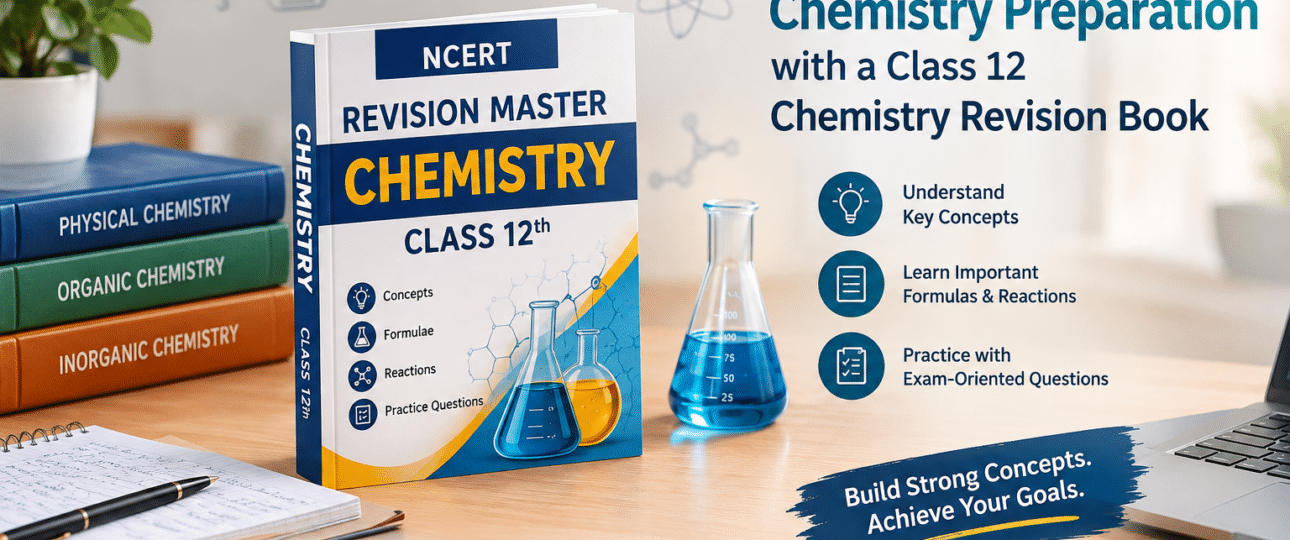
One option to consider is NCERT Revision Master – Chemistry Class 12th by Adhipati Creations. This revision-cum-workbook is positioned for students preparing for school examinations as well as NEET and JEE. This guide compares common study resources, explains what to look for in a revision book, and shows how students can use one as part of a balanced study plan.
1. Is NCERT Chemistry Important for NEET and JEE?
NCERT Chemistry provides an organised foundation for many Class 12 topics, definitions, reactions, and principles. It should remain a core resource for students who are preparing for school examinations and competitive entrance tests.
For NEET aspirants, careful reading of NCERT can support preparation for theory-based, reaction-based, and concept-based questions. JEE aspirants can also use NCERT to strengthen their Chemistry fundamentals, while adding suitable numerical, application-based, and examination-level questions according to their target exam.
Reading a chapter can create familiarity, but students may still struggle to recall a formula, recognise a reaction, or solve a question quickly. A balanced preparation plan should include three activities:
- Conceptual learning: Understand why a chemical process or reaction occurs.
- Active revision: Recall formulas, reactions, definitions, properties, and exceptions without immediately checking the book.
- Question practice: Apply what you have learned through suitable MCQs, numerical problems, previous-year questions, and mock tests.
A revision resource is most useful when it supports these activities rather than replacing the prescribed textbook or detailed teaching where those are still needed.
2. What Should You Look for in a Class 12 Chemistry Revision Book?
Not every Chemistry book serves the same purpose. Some explain concepts in depth, some provide extensive question banks, and others help students revisit previously studied material. Before selecting a Class 12 Chemistry revision book, consider the following factors.
Alignment with the Current Syllabus
The content should be checked against the syllabus applicable to your examination year. This helps students prioritise relevant topics and avoid spending limited revision time on material that is not required. Verify the current NEET or JEE syllabus separately instead of assuming every book automatically reflects the latest changes.
Clear and Organised Revision
Physical Chemistry requires a sound understanding of formulas, units, and calculations. Organic Chemistry requires students to understand reactions and recognise patterns. In Inorganic Chemistry, properties, trends, and exceptions often need repeated revision. A useful revision aid should help students organise these different types of information and return to difficult areas systematically.
Practice and Self-Assessment
Practice helps students find out whether they can apply what they have learned without looking at the solution immediately. NEET students should practise relevant MCQs and work on accuracy, while JEE students should include numerical and application-based questions appropriate to their examination level.
Easy Navigation
Clearly arranged topics, concise summaries, formula lists, reaction reviews, and exercises can make revision easier to manage, particularly when students are balancing board preparation with entrance-exam study. Before buying a book, check its available preview and contents to see whether its format suits your needs.
3. NCERT Textbook vs Reference Book vs Revision Workbook
Students often compare NCERT textbooks, detailed reference books, and revision workbooks as if one resource must replace the others. In practice, each can serve a different purpose. The right choice depends on whether the student needs to learn a concept for the first time, explore it in greater depth, or reinforce previously studied material.
| Comparison Factor | NCERT Chemistry Textbook | Detailed Reference Book | Revision Workbook |
|---|---|---|---|
| Main purpose | Build syllabus fundamentals | Explain concepts in greater depth | Reinforce and revise learned concepts |
| Theory | Core explanations and examples | More extensive explanations, depending on the book | Usually focused on revision |
| Practice | Textbook exercises | May include extensive question sets | Supports structured revision and practice |
| Best suited for | Students building subject foundations | Students needing additional conceptual support | Students who have studied the syllabus and need reinforcement |
| Potential limitation | May not provide all the entrance-level practice a student needs on its own | Can require considerable study time | May not replace detailed teaching or advanced problem-solving practice |
This comparison shows why a book should be selected according to a student's specific learning gap. For example, if a student understands Chemical Kinetics but keeps forgetting formulas, a structured revision session may help. If the student does not understand the underlying principle, revisiting NCERT, class notes, or a detailed reference explanation may be more appropriate.
Students can also explore the Class 12 Chemistry book collection to compare relevant study resources and choose materials that match their preparation requirements.
4. How NCERT Revision Master – Chemistry Class 12th Can Support Preparation
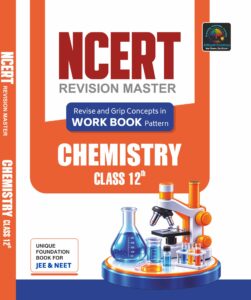
The NCERT Revision Master – Chemistry Class 12th from Adhipati Creations is presented as a revision-cum-workbook for students preparing for NEET and JEE. Its intended role is to complement regular NCERT study by giving students an additional resource for revisiting and reinforcing concepts.
Structured Chemistry Revision
Regular revision can help students return to topics throughout the academic year instead of leaving all revision until the final weeks. Students can use a workbook as part of a repeatable routine: review a topic, attempt the related work, identify mistakes, and revisit areas that remain difficult.
Reinforcement and Recall
Repeatedly trying to recall information helps students check what they actually remember. Instead of only highlighting or rereading a page, students can close their textbook, recall important points, and then check their understanding. A revision workbook can be incorporated into this process alongside NCERT and class notes.
Support for NEET and JEE Preparation
The book is positioned for Class 12 Chemistry revision for medical and engineering entrance preparation. Students should use it according to their current level and supplement it with the question practice, previous-year papers, and mock tests required for their specific examination.
A More Systematic Study Routine
Students who find unstructured revision difficult may benefit from setting clear goals for each study session. They can decide which chapter to revise, what they need to recall, which questions to attempt, and which errors to review later.
Before purchasing, check the product page and any available preview for the current contents and format. The information available for a book should be reviewed carefully to confirm that it meets your needs, including the amount and type of practice you expect.
5. How Can the Right Chemistry Book Help Improve Exam Performance?
No book can guarantee a particular score. A study resource is valuable when students use it consistently to improve understanding, recall, accuracy, and their approach to questions. These are some ways a well-matched resource can support preparation.
Reduce Avoidable Errors
In Physical Chemistry, errors can occur when students choose the wrong formula, miss a unit conversion, or make a calculation mistake. Reviewing incorrect answers and repeating similar questions can help students identify recurring problems and improve their method.
In Organic Chemistry, students can review reactions and practise recognising patterns. In Inorganic Chemistry, planned revision can help them revisit facts, properties, trends, and exceptions. The important step is to use mistakes as a guide for what to study next.
Improve Recall Under Time Pressure
Remembering an answer while reading at home is different from recalling it during a timed examination. Students can practise by closing the textbook, writing down key formulas or reactions from memory, and then checking their answers. Timed questions can help them learn to apply this knowledge within an exam setting.
Identify Knowledge Gaps Before the Exam
Understanding an explanation does not always mean a student can solve a related question independently. Practice can reveal whether the difficulty lies in conceptual understanding, remembering a formula, carrying out a calculation, or applying a reaction correctly.
For example, a student who understands Electrochemistry but repeatedly makes calculation errors should practise those calculations and check each step. A student who forgets Organic Chemistry reactions may need more frequent reaction revision and question-based recall.
Make Preparation More Efficient
Using too many books at the same time can make revision confusing. A more manageable approach may be to use NCERT as the foundation, one suitable reference resource when detailed explanation is needed, and a revision or practice resource that addresses specific weaknesses. Add previous-year questions and mock tests according to the target examination.
6. A Practical Method for Using a Class 12 Chemistry Revision Book
A simple study cycle can help students use their resources with a clear purpose. Adjust the time spent at each stage according to your current understanding and the demands of your examination.
- Step 1: Learn from NCERT. Study the chapter and understand its definitions, concepts, reactions, examples, and formulas.
- Step 2: Revise systematically. Use an additional resource, such as NCERT Revision Master, to revisit concepts you have already studied.
- Step 3: Practise independently. Attempt relevant questions before checking the answers. Record mistakes and note the topics that need more work.
- Step 4: Test your preparation. Attempt previous-year papers and mock tests that match the relevant NEET or JEE pattern, using the current official examination guidance.
- Step 5: Revisit weak areas. Review your errors and repeat questions or revision activities where necessary.
Students with weak fundamentals should give more time to learning and understanding. Students who know the concepts but continue to make mistakes may benefit from focused practice, correction, and timed tests.
For additional exam-oriented material, students preparing for JEE can also review JEE Main Smart Solve Chemistry Class XII. Students looking for chapter-wise Chemistry MCQs and previous-year questions for Class 12 NEET preparation can explore NEET Through NCERT Chemistry for Class 12th. Choose supplementary material based on your exam and the skills you need to practise.
Frequently Asked Questions
The Official NCERT Textbook is the must-have go to book for this subject. Those students who are planning to revise in a more systematic manner can opt for the NCERT Revision Master – Chemistry Class 12th as they can further practice NEET questions.
NCERT is crucial for strengthening our JEE Main preparations and Chemistry basics. Yet, you need to solve more past years’ questions on the same line as your target exam and level of preparation, along with extra questions. You may need to use more concepts for JEE Advanced.
Lorem ipsum dolor sit amet, consectetur adipisicing elit. Optio, neque qui velit. Magni dolorum quidem ipsam eligendi, totam, facilis laudantium cum accusamus ullam voluptatibus commodi numquam, error, est. Ea, consequatur.
Students should revise each chapter regularly as they finish it and not wait until the end of the year to revise, as this is an inefficient way of revising. Brief sessions of revision are more effective than longer revision sessions.
Adhipati Creations offers NCERT Revision Master – Chemistry Class 12th as a revision-cum-Workbook for NEET and JEE. Students should go through the book and complement it with examination-oriented practice for thorough preparation.