Publishing a book especially through self-publishing is an exciting journey for any author. After months or even years of writing, many writers believe the hardest part is over once the manuscript is complete. However, the real transformation of a manuscript into a professional, publish-ready book happens during the editing and proofreading stage.
Many authors often confuse editing vs proofreading, assuming both mean the same thing. In reality, they serve different purposes and occur at different stages of the publishing process. Understanding the difference between editing and proofreading can help authors improve their manuscript quality and ensure their work meets professional publishing standards.
In this guide, we will clearly explain what is proofreading vs editing, explore the types of editing, and help authors understand when they need editing and proofreading services.
Why Editing and Proofreading Matter in Self-Publishing
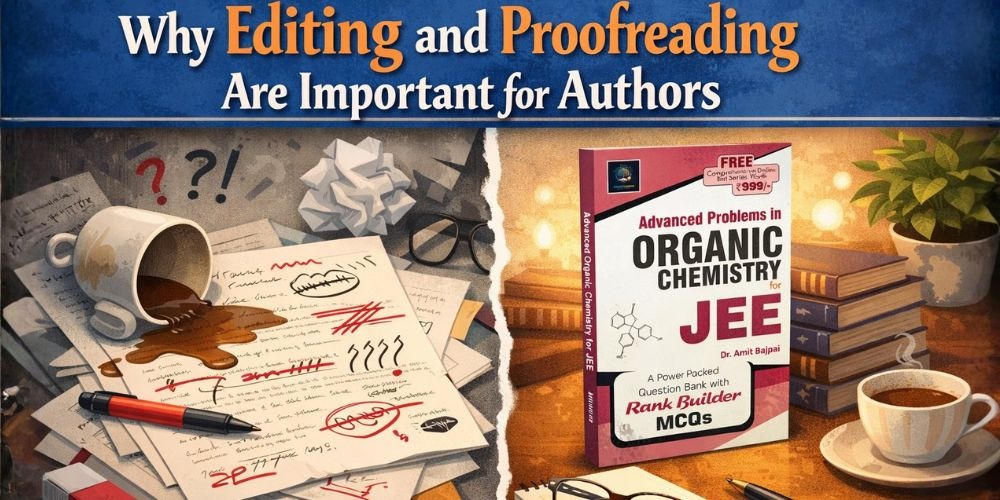
In traditional publishing houses, manuscripts pass through several layers of editors before reaching readers. However, in self-publishing, the responsibility of ensuring the manuscript is polished and error-free falls largely on the author.
A book that lacks professional editing can suffer from:
- · Grammar and spelling mistakes
- · Inconsistent tone or writing style
- · Weak sentence structure
- · Plot or content inconsistencies
- · Poor readability
These issues can negatively affect reviews, credibility, and reader experience.
Professional editing and proofreading services help authors transform their manuscripts into clear, engaging, and polished books. While both services aim to improve a manuscript, they focus on different aspects of the text.
To understand this better, let’s first look at the core concept of editing vs proofreading.
Editing vs Proofreading: Understanding the Core Difference
The biggest confusion among authors is the difference between editing and proofreading.
Simply put:
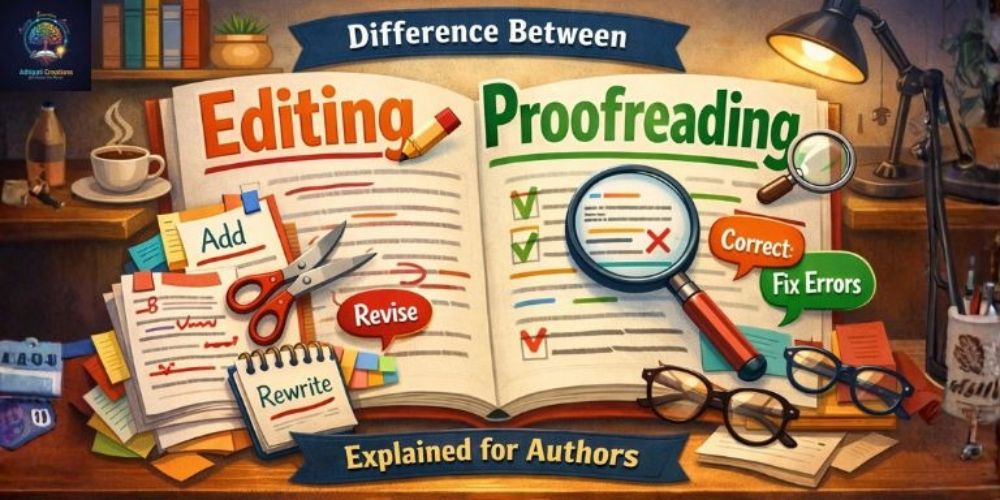
Editing focuses on improving the content, clarity, structure, and flow of the manuscript.
Proofreading focuses on correcting surface-level errors such as spelling, punctuation, and formatting mistakes.
Editing happens before proofreading. Proofreading is the final step before publication.
Think of the process like building a house.
Editing is like renovating the structure—adjusting walls, fixing design flaws, and improving the layout.
Proofreading is like cleaning the house before guests arrive—removing dust, fixing tiny scratches, and making everything perfect.
Both are essential, but they serve different purposes.
What is Editing?
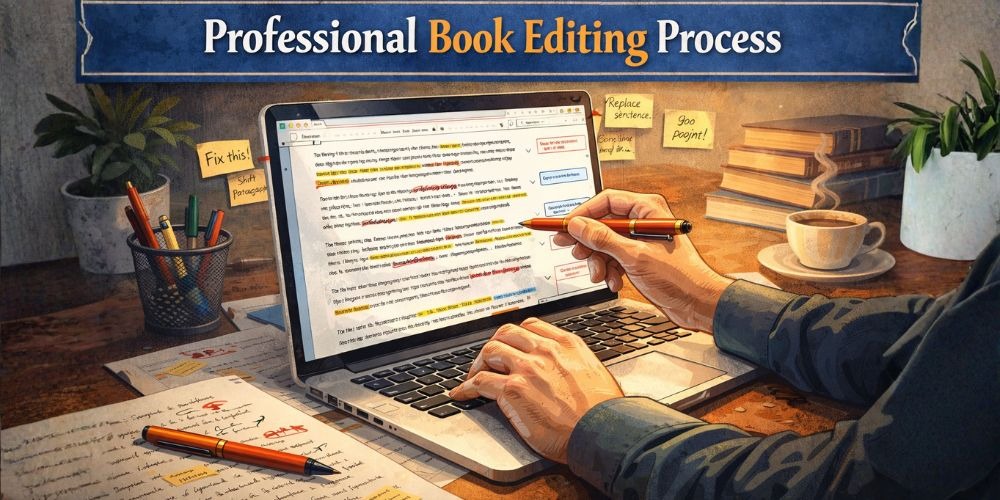
Editing is the process of reviewing and improving a manuscript to enhance clarity, readability, and overall quality.
Editors analyze the text at a deeper level than proofreaders. They may restructure sentences, suggest rewrites, adjust tone, and ensure the content flows smoothly.
Professional editing helps authors:
- · Improve readability
- · Strengthen storytelling or arguments
- · Maintain consistency
- · Eliminate awkward phrasing
- · Ensure professional writing standards
Editing is not just about correcting mistakes it’s about making the manuscript stronger and more impactful. It is as essential as having the right competitive exam resources for success.
Types of Editing Authors Should Know
Understanding the types of editing is important because different manuscripts require different levels of editing.
Here are the main types of editing used in publishing.
1. Developmental Editing
Developmental editing focuses on the big picture of a manuscript. It examines elements such as story structure, plot development, character arcs, content organization, and logical flow of ideas. This type of editing is common in novels, memoirs, and nonfiction books. A developmental editor may suggest rearranging chapters, expanding certain sections, removing unnecessary content, or improving pacing. It is usually the first stage of editing.
2. Line Editing
Line editing focuses on sentence-level clarity and style. Editors improve how sentences sound and flow by rewriting awkward phrases, improving tone and voice, eliminating redundancy, and enhancing readability. While developmental editing looks at the structure, line editing focuses on how the writing communicates ideas.
3. Copy Editing
One of the most commonly requested services is copy editing. Copy editing focuses on technical accuracy and consistency. A copy editor checks grammar, spelling, punctuation, sentence structure, word usage, and consistency in style. For example, a copy editor ensures character names are spelled consistently, dates and timelines match, and formatting is uniform. Professional copy editing ensures the manuscript meets standard language rules.
4. Substantive Editing
Substantive editing combines elements of developmental and line editing. This type of editing may involve rewriting sections of text, improving arguments or explanations, and clarifying confusing passages. Substantive editing is often required for academic, technical, or research-based books.
What is Proofreading?
Proofreading is the final stage of the publishing process. Once editing is complete and the manuscript is formatted for publication, a proofreader performs a final check to ensure the text is completely error-free. Proofreading focuses on small but important details such as spelling mistakes, punctuation errors, grammar issues, formatting inconsistencies, and typographical errors. Unlike editing, proofreading does not involve major rewriting or restructuring. Its main goal is to catch the last remaining mistakes before publication.
What Do Professional Proofreading Services Check?
Professional proofreading services review the final manuscript with a sharp eye for detail. A proofreader typically checks for:
- · 1. Spelling Errors: Even experienced writers can miss spelling mistakes during writing. Proofreaders identify and correct these errors to ensure professional presentation.
- · 2. Grammar Mistakes: Incorrect verb tense, subject-verb agreement, or sentence fragments can reduce readability. Proofreaders correct these issues.
- · 3. Punctuation Errors: Misplaced commas, quotation marks, or missing periods can change meaning.
- · 4. Formatting Issues: Proofreaders look at layout elements such as paragraph spacing, heading consistency, font usage, and page numbering.
These small corrections improve the overall appearance of the book.
Editing vs Proofreading: A Clear Comparison
Understanding editing vs proofreading becomes easier when we compare them directly.
| Feature | Editing | Proofreading |
|---|---|---|
| Purpose | Improve content and structure | Fix surface errors |
| Focus | Clarity, flow, style | Grammar, spelling, punctuation |
| Stage | Early to middle stage | Final stage before publishing |
| Changes | May involve rewriting | Only minor corrections |
| Depth | Deep manuscript review | Final quality check |
In simple terms: Editing improves the writing. Proofreading perfects the writing. Both are essential parts of professional editing and proofreading services. Just as students must stay consistent during exam preparation, authors must be consistent in their quality.
Why Authors Often Confuse Editing and Proofreading
Many new authors assume proofreading alone is enough. This confusion happens because both involve reviewing text, both correct mistakes, and the terms are sometimes used interchangeably. However, skipping editing and relying only on proofreading can leave serious issues unresolved, such as weak storytelling, confusing explanations, or poor sentence flow. A proofreader will not fix these problems. That’s why professional publishers always use multiple levels of editing before proofreading.
When Should Authors Use Editing Services?
Authors should consider editing services when the manuscript needs clarity improvement, the writing feels rough or inconsistent, the structure needs refinement, or the book is intended for professional publication. Editing is especially important for first-time authors who may not yet have strong editorial experience. Investing in professional editing significantly improves the chances of producing a high-quality book found in any shop.
When Do Authors Need Proofreading Services?
Proofreading should happen after all editing is complete. Authors should use proofreading services when the manuscript is fully edited, the book has been formatted for print or digital publishing, and the final version needs a quality check. Proofreading ensures the book looks professional and polished before it reaches readers. This level of detail is what we provide for our Class 11 and Class 12 academic materials as well.
“The ideal workflow for professional publishing follows: Manuscript writing, Developmental editing, Line editing, Copy editing, Formatting, and Proofreading.”
Benefits of Professional Editing and Proofreading Services
- · 1. Higher Quality Writing: Editors refine the manuscript to make it clearer, stronger, and more engaging.
- · 2. Better Reader Experience: Readers are more likely to enjoy books that are well-written and error-free.
- · 3. Improved Credibility: A polished manuscript reflects professionalism. See Adhipati Creations store for examples.
- · 4. Stronger Reviews: Books with fewer mistakes often receive better ratings. For tips, visit The Creative Penn.
- · 5. Increased Publishing Success: Professional editing increases success in both self-publishing and traditional publishing.
Common Mistakes Authors Make
Many authors make avoidable mistakes during the editing stage, such as skipping editing to save money, relying only on spell-check tools, asking friends instead of professionals, or publishing without proofreading. While automated tools can help, they cannot replace the expertise of professional editors. Human editors understand context, tone, and storytelling, which software tools cannot fully detect. Authors should always check the plan and pricing before starting.
Final Thoughts: Editing vs Proofreading Explained
Understanding editing vs proofreading is essential for every author preparing a manuscript for publication. Editing focuses on improving the quality of writing, while proofreading ensures the final manuscript is free from errors. Both stages play a crucial role in producing a professional book. By understanding the types of editing, including copy editing, and knowing when to use proofreading services, authors can ensure their work meets high publishing standards. In the world of self-publishing, where authors control the entire process, investing in professional editing and proofreading services can make the difference between an average book and an exceptional one. A well-edited and carefully proofread manuscript not only enhances readability but also reflects the author’s dedication to quality and professionalism. Ultimately, taking the time to understand the difference between editing and proofreading helps authors publish books they can truly be proud of.
✅ Ready to turn your manuscript into a professional book?
Don't get lost in the confusion of the publishing world. Contact Adhipati Creations today for a free consultation. Let’s discuss your manuscript and how we can help you become a published author.