
Publishing a book is an exciting achievement for any writer. Whether you are a first-time author or an experienced storyteller, completing your manuscript is a major milestone. However, writing the book is only half the journey. Before your work reaches readers, one crucial step remains-book editing.
Many authors, especially those choosing self-publishing, underestimate the importance of professional editing. They often assume that basic proofreading or self-editing is enough. Unfortunately, skipping professional editing can lead to grammatical errors, poor structure, and a weak reading experience that damages both the book and the author's reputation.
This is where book editing services become essential. Professional editing transforms a raw manuscript into a polished, reader-ready book that meets publishing standards. In this article, we will explore the importance of book editing, how it improves reader experience, the difference between professional and self-editing, and how editing helps build a strong author brand.
Understanding Book Editing
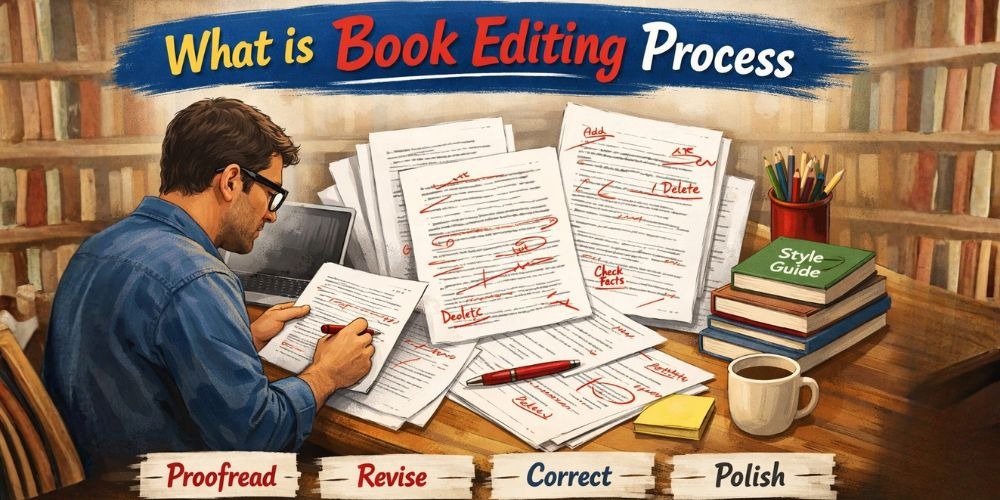
Before discussing why editing is important, it’s important to understand what book editing actually involves.
Book editing is not just correcting spelling mistakes. It is a comprehensive process that improves the quality, clarity, structure, and readability of a manuscript. Professional editors carefully review the manuscript to refine language, correct grammar, improve flow, and ensure consistency throughout the book.
The editing process generally includes several stages:
1. Manuscript Editing
Manuscript editing focuses on improving the overall structure and clarity of the content. Editors examine elements such as sentence structure, paragraph flow, tone, and logical progression of ideas. This stage ensures the manuscript communicates the author’s message effectively.
2. Copy Editing
Copy editing focuses on grammar, punctuation, spelling, and consistency. Editors also correct awkward phrasing and eliminate repetition to improve readability.
3. Book Proofreading
The final stage is book proofreading, which catches minor errors before publishing. Proofreaders ensure the text is free from typos, formatting issues, and punctuation mistakes.
Together, these stages form the foundation of professional book editing, ensuring that a manuscript is polished and ready for publication.
The Importance of Book Editing Before Publishing
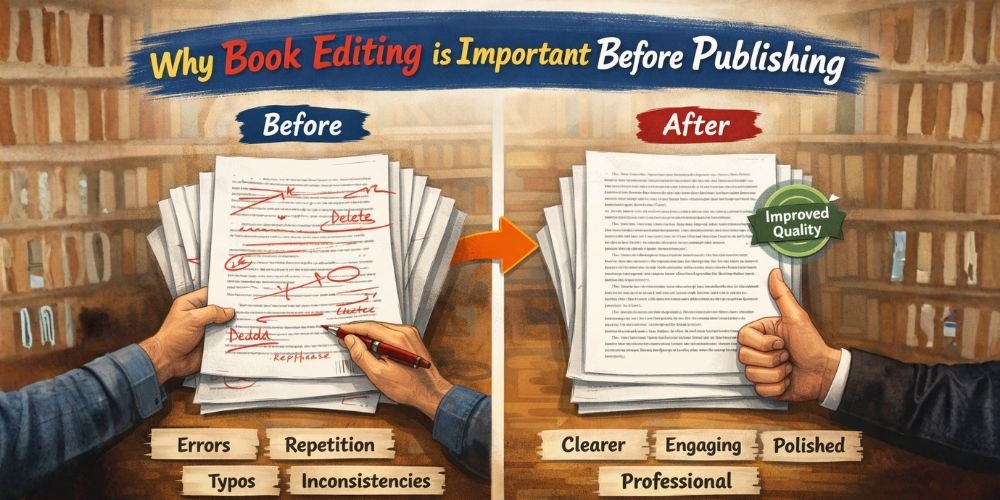
The importance of book editing cannot be overstated. Even the most talented writers make mistakes. Writing involves creativity and expression, but editing ensures accuracy and clarity.
Here are some key reasons why editing is important before publishing:
- 1. Eliminates Errors
A manuscript may contain spelling errors, grammar mistakes, and punctuation issues that the author may overlook. These errors can distract readers and reduce the credibility of the book.
Professional book editing services identify and correct these issues, ensuring the final book is clean and professional.
- 2. Improves Clarity
Writers are often deeply familiar with their own ideas, which sometimes leads to unclear explanations. An editor approaches the manuscript from a reader’s perspective and helps improve clarity and readability.
- 3. Strengthens the Structure
A well-edited book has a clear flow and logical structure. Editors help organize chapters, refine transitions, and ensure that the narrative or argument progresses smoothly.
- 4. Enhances Quality
Editing enhances the overall quality of a manuscript by refining language, improving sentence flow, and eliminating unnecessary words.
Without proper editing, even a great story can lose its impact.
How Editing Improves Reader Experience
One of the most important goals of editing is to improve the reader experience. For more insights on quality writing, you can refer to the Oxford Editing Blog.
Readers expect professionally written books that are easy to understand and enjoyable to read. Poor editing can interrupt the reading flow and frustrate readers.
1. Smooth Reading Flow
Editing removes awkward sentences and improves transitions between paragraphs and chapters. This creates a smooth reading experience that keeps readers engaged.
2. Consistent Tone and Style
Professional editors ensure the tone of the book remains consistent throughout the manuscript. Whether the book is fiction, non-fiction, or academic, consistency helps readers connect with the content.
3. Increased Reader Trust
Readers trust books that are professionally written and edited. A book full of errors can damage the reader’s confidence in the author.
4. Better Reviews and Ratings
Books that provide a strong reading experience are more likely to receive positive reviews and recommendations. Good editing directly contributes to higher reader satisfaction.
For self-published authors especially, investing in professional book editing can significantly improve the reception of their work.
Professional Book Editing vs Self-Editing
Many authors attempt to edit their own work to save money. While self-editing is an important first step, it cannot replace professional editing.
Let’s compare the two approaches.
Self-Editing
Self-editing involves reviewing and revising your own manuscript. Authors typically check for grammar errors, awkward sentences, and inconsistencies.
While this step is useful, it has limitations.
Limitations of Self-Editing
- · Authors may overlook errors because they are familiar with the content.
- · It is difficult to evaluate the manuscript objectively.
- · Structural issues may go unnoticed.
- · Writers often read what they intended to write rather than what actually appears on the page.
Professional Book Editing
Professional editors bring experience, objectivity, and technical knowledge to the editing process.
Benefits of professional book editing include:
- · Expert grammar and language corrections
- · Improved narrative flow
- · Structural improvements
- · Consistency checks
- · Reader-focused revisions
Professional editors treat the manuscript from the perspective of the target audience, ensuring the book communicates effectively.
While self-editing is valuable, combining it with professional book editing services produces the best results.
The Role of Editing in Self-Publishing
Self-publishing has become increasingly popular in recent years. Platforms like Amazon Kindle Direct Publishing allow authors to publish their books independently.
However, self-publishing also means that the author is responsible for maintaining quality.
Traditional publishing houses typically provide editorial support, but self-published authors must arrange editing themselves.
This is where book editing services become critical.
Professional editing ensures that self-published books meet the same quality standards as traditionally published titles.
Key benefits for self-published authors include:
- · Higher credibility
- · Professional presentation
- · Better reader engagement
- · Stronger market competitiveness
Without proper editing, self-published books may appear amateurish, regardless of how strong the story or ideas may be.
Building Your Author Brand Through Editing
Every book an author publishes contributes to their personal brand.
Readers remember the quality of the books they read. If a book contains numerous errors, readers may hesitate to purchase future titles from the same author.
Professional editing helps establish a strong author reputation.
1. Professional Image
A well-edited book reflects professionalism and dedication. Readers appreciate authors who invest in quality.
2. Increased Credibility
Professional editing ensures the information in the book is presented clearly and accurately, enhancing the author’s credibility.
3. Reader Loyalty
When readers enjoy a well-written and well-edited book, they are more likely to follow the author’s future work.
4. Stronger Publishing Portfolio
For authors planning multiple publications, consistent editing quality helps build a recognizable and trustworthy brand.
This is particularly important for authors looking to grow their presence in the competitive self-publishing market.
Book Editing Services in India
The demand for book editing services in India has increased significantly as more authors turn to self-publishing.
India has a rapidly growing community of writers, bloggers, and independent publishers who require professional editing support.
Professional editing services in India typically offer:
- · Manuscript editing
- · Copy editing
- · Book proofreading
- · Structural editing
- · Formatting guidance
These services help authors transform rough manuscripts into polished books ready for digital and print publishing.
Many Indian editing companies work with both domestic and international authors, providing high-quality editing at competitive prices.
For writers in India, investing in professional editing can make the difference between an average book and a truly professional publication.
Common Mistakes That Editing Helps Fix
Even experienced writers make common writing mistakes that professional editing can resolve.
1. Repetition
Writers often repeat words or phrases unintentionally. Editors refine the language to maintain variety and clarity.
2. Grammar and Punctuation Errors
Minor grammar issues can affect readability. Professional editors ensure correct grammar usage throughout the manuscript.
3. Inconsistent Voice
A book may shift between formal and informal tones. Editing ensures a consistent voice.
4. Structural Problems
Sometimes chapters or sections may feel disorganized. Editors help restructure the content for better flow.
5. Overly Complex Sentences
Long and complicated sentences can confuse readers. Editing simplifies language while preserving the author’s meaning.
By addressing these issues, manuscript editing significantly improves the overall quality of the book.
How to Choose the Right Book Editing Service
Choosing the right editing service is essential for achieving the best results.
Here are a few factors to consider when selecting book editing services:
- 1. Experience: Look for editors with experience in your genre.
- 2. Sample Edits: Many editing services provide sample edits so authors can evaluate their style and approach.
- 3. Clear Editing Process: A professional editing service should clearly explain their editing stages, timelines, and pricing.
- 4. Author Collaboration: Good editors collaborate with authors rather than rewriting their work completely. The goal is to improve the manuscript while preserving the author's voice.
“The importance of book editing lies in its ability to enhance clarity, eliminate errors, improve reader experience, and strengthen an author’s brand.”
Final Thoughts
Writing a book requires creativity, passion, and dedication. However, transforming a manuscript into a successful publication requires another crucial step—professional editing.
The importance of book editing lies in its ability to enhance clarity, eliminate errors, improve reader experience, and strengthen an author’s brand.
Whether you are publishing your first book or expanding your writing career, investing in professional book editing ensures your work meets the highest standards of quality.
For authors choosing self-publishing, book editing services are not just an optional step—they are an essential part of the publishing process.
A well-edited book reflects professionalism, builds reader trust, and increases the chances of success in the competitive publishing industry.
If you want your book to leave a lasting impression on readers, start with one simple step: professional editing.
✅ Ready to turn your manuscript into a professional book?
Don't get lost in the confusion of the publishing world. Contact Adhipati Creations today for a free consultation. Let’s discuss your manuscript and how we can help you become a published author.