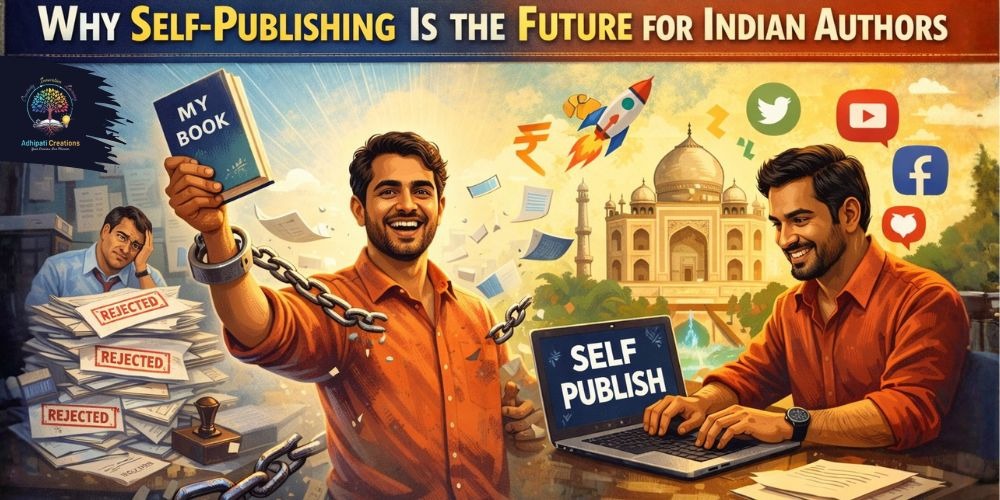
The Indian literary landscape is undergoing a powerful transformation. What once revolved around traditional gatekeepers—large publishing houses, literary agents, and limited bookstore space—has now expanded into a dynamic, author-driven ecosystem. Today, the future of self publishing in India looks not only promising but revolutionary.
From emerging writers in small towns to seasoned professionals transitioning from traditional publishing, more and more Indian authors self publishing are taking control of their creative destinies. Thanks to digital platforms, print-on-demand technology, and global distribution channels, the rules of the game have changed.
In this detailed blog, we’ll explore:
- · Indian publishing trends
- · The rise of digital platforms
- · Author independence
- · Global reach
- · Why self publishing is growing in India
- · The long-term self publishing future for authors
Let’s dive deep into this evolving story.
The Changing Landscape of Publishing Industry in India
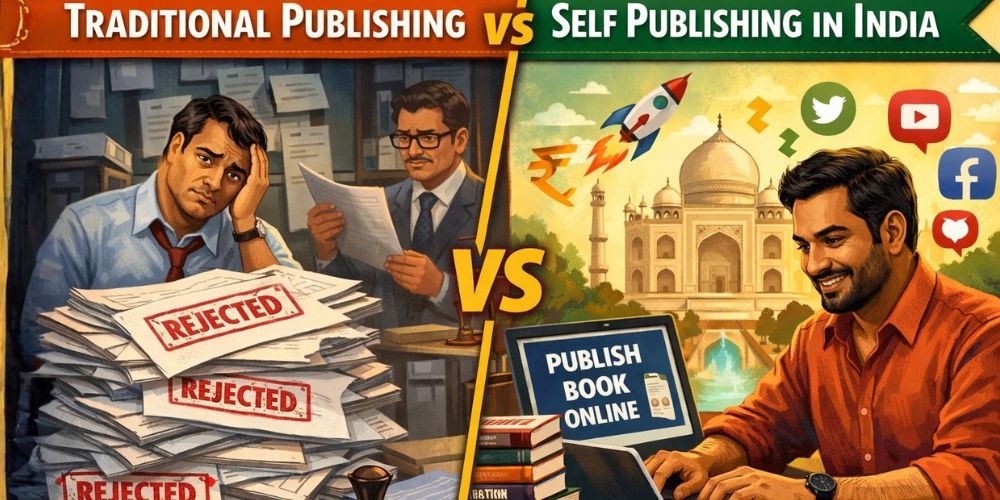
The publishing industry India has historically been dominated by traditional publishing houses such as Penguin Random House India, HarperCollins India, Rupa, and Westland. These houses have played a vital role in shaping modern Indian literature.
However, traditional publishing comes with limitations:
- · Long submission and approval timelines
- · Limited slots for new authors
- · Lower royalty percentages
- · Creative control resting with publishers
- · Marketing support often reserved for established writers
Indian Book Publishing Trends: A Shift in Power
Recent Indian book publishing trends show a steady rise in self-published titles year after year. Several factors contribute to this shift:
- 1. Increased internet penetration
- 2. Growth of online marketplaces
- 3. Smartphone adoption in rural and urban areas
- 4. Higher literacy rate
- 5. Young population with diverse reading interests
India is one of the fastest-growing book markets in the world. Yet, traditional publishers can only accommodate a fraction of aspiring authors. This gap has created space for self-publishing to thrive.
Why Self Publishing Is Growing in India
When analyzing why self publishing is growing in India, the answer lies in technology, accessibility, and ambition.
1. Digital Platforms Revolution
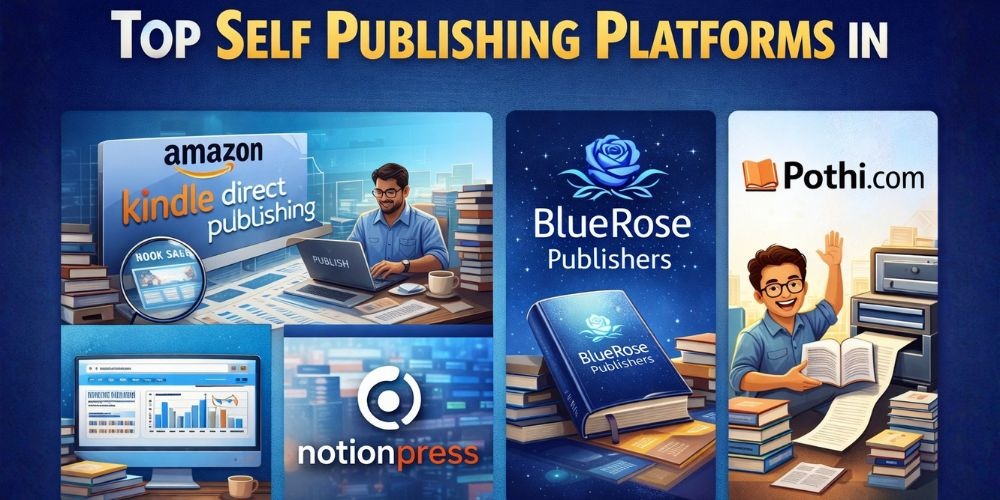
Platforms like Amazon Kindle Direct Publishing (KDP), Notion Press, BlueRose Publishers, and Pothi have simplified publishing dramatically.
Amazon Kindle Direct Publishing (KDP)
Amazon Kindle Direct Publishing allows authors to:
- · Publish eBooks and paperbacks
- · Reach global audiences
- · Earn up to 70% royalties
- · Publish within 72 hours
For many Indian authors self publishing, this platform has become the entry point to global readership.
2. Print-on-Demand Technology
Gone are the days of printing 2000 copies upfront. With print-on-demand:
- · Books are printed only when ordered
- · No inventory cost
- · Minimal financial risk
- · Available across India
This model supports first-time authors who cannot afford large print runs.
3. Creative Freedom
Traditional publishing often edits heavily for market trends. Self-publishing gives authors:
- · Full control over content
- · Freedom in cover design
- · Control over pricing
- · Decision-making power on marketing strategy
This independence is one of the strongest reasons behind the rise in self publishing trends India.
Digital India and the Rise of Online Reading
India’s rapid digital transformation is a major factor behind the future of self publishing in India.
Smartphone Culture
India has over 700 million internet users. Affordable data plans have fueled digital consumption. Ebooks, audiobooks, and online reading apps such as Kindle, Google Play Books, and Storytel are expanding readership.
Regional Content Explosion
Self-publishing allows authors to write in Hindi, Marathi, Tamil, Telugu, Bengali, Malayalam, and Gujarati. Traditional publishers often prioritize English titles. Self-publishing opens doors for regional language authors, strengthening Indian book publishing trends.
Author Independence: The Core of Self Publishing Future for Authors
One of the strongest pillars of the self publishing future for authors is independence.
Ownership of Rights
Traditional publishing usually holds rights for Translation, Film adaptation, and International editions. Self-publishing allows authors to retain Copyright, Global rights, and Creative ownership. This is a massive advantage in India’s growing entertainment industry.
Higher Royalties
Traditional publishing: 7–15% royalty | Self-publishing: 30–70% royalty. For ambitious writers, the financial incentive is undeniable.
Global Reach: Indian Authors Going International
Today, an author sitting in Jaipur, Kochi, or Guwahati can publish a book that reaches readers in USA, UK, Canada, Australia, UAE, and Singapore. Platforms like Amazon list books globally in minutes. This international exposure reinforces the future of self publishing in India as a borderless opportunity.
Changing Reader Behavior in India
Modern readers are open to new voices and discovering books via Instagram and YouTube. Self-published authors leverage Bookstagram and influencer marketing to build direct reader engagement. This strengthens brand-building for Indian authors self publishing.
Self Publishing Trends India: Key Observations
Let’s look at major self publishing trends India has shown in recent years.
1. Rise of Young Authors: College students and professionals are publishing debut novels.
2. Growth of Non-Fiction: Categories like Personal development, Entrepreneurship, and Finance are growing rapidly.
3. Hybrid Publishing Models: Many Indian platforms now offer hybrid services including professional editing, ISBN distribution, and marketing.
Challenges in Traditional Publishing Industry India
To understand the future of self publishing in India, we must examine the bottlenecks: Long waiting periods (6–18 months), limited acceptance rates, and marketing limitations. These factors push authors toward exploring the self publishing future for authors.
“The momentum behind self publishing trends India is strong, data-backed, and culturally aligned with modern India.”
Why Self Publishing Is the Future for Indian Authors
Bringing all insights together: Faster publishing, higher royalties, creative freedom, global distribution, and regional language empowerment. Self-publishing aligns perfectly with India’s entrepreneurial spirit.
The country that produced millions of startups is now producing thousands of independent authors. The future of self publishing in India is not just a possibility—it’s a transformation already underway.
Final Thoughts
The evolution of Indian book publishing trends signals a major shift in power—from publishers to authors. For aspiring writers, self-publishing offers Ownership and Sustainability. If you’re ready to start, check our Smart Self Publishing Plan or explore the Quantum Plan for total dominance.
In conclusion, the future of self publishing in India is bright, accessible, and revolutionary—reshaping the publishing industry India for generations to come.
✅ Ready to turn your manuscript into a professional book?
Don't get lost in the confusion of the publishing world.Contact Adhipati Creations today for a free consultation. Let’s discuss your manuscript and how we can help you become a published author.