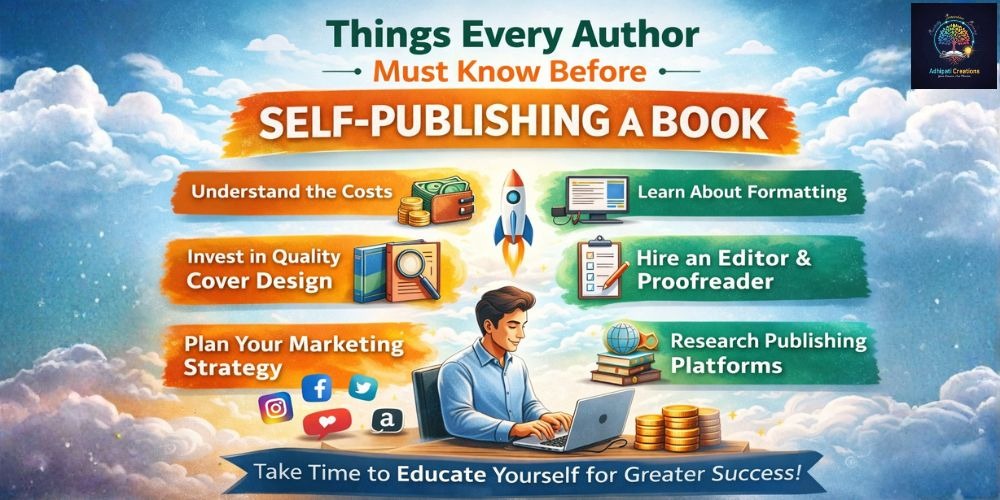
Self-publishing has transformed the publishing industry. Today, authors no longer need to wait for traditional publishing houses to approve their manuscripts. With the right self publishing tips and preparation, anyone can self publish a book and build a successful author career.

However, while self-publishing offers freedom and control, it also demands responsibility. From manuscript readiness and editing to ISBN registration and marketing strategy, every step requires careful planning.
If you are a first-time writer, this comprehensive first time self publishing author guide will walk you through everything you must know before publishing your book.
1. Understanding What Self-Publishing Really Means

Before diving into practical steps, let’s clarify what it truly means to self publish a book.
Self-publishing means:
- You control the entire publishing process
- You retain full copyright and royalties
- You finance editing, design, and marketing
- You decide pricing and distribution platforms
Unlike traditional publishing where a publisher handles editing, printing, and marketing (while taking a large share of royalties), self-publishing puts you in charge.
This control can be empowering — but only if you are prepared.
2. Manuscript Readiness: Is Your Book Truly Finished?
One of the biggest mistakes first-time authors make is rushing to publish.
Writing “The End” does not mean your manuscript is ready.
Ask Yourself:
- Have I revised it multiple times?
- Have I removed weak scenes?
- Is the pacing consistent?
- Are characters fully developed?
- Is the argument strong (for nonfiction)?
Self Publishing Preparation Steps for Manuscript
- Complete first draft without over-editing.
- Let it rest for 2–4 weeks.
- Do a structural edit (big-picture changes).
- Do a line edit (sentence clarity).
- Proofread carefully.
Remember: Publishing too early can permanently damage your credibility.
Professional preparation separates amateur authors from serious ones.
3. Editing Is Not Optional
If there is one rule in every self publishing checklist, it is this:
Never skip professional editing.
Even bestselling authors work with editors.
There are three main types of editing:
1. Developmental Editing
Focuses on:
- Plot holes
- Story structure
- Character development
- Logical flow
Best for fiction and memoir.
2. Line / Copy Editing
Focuses on:
- Grammar
- Clarity
- Tone consistency
- Sentence improvement
3. Proofreading
The final polish to catch:
- Typos
- Formatting issues
- Minor errors
Why Editing Matters
- Increases credibility
- Improves reader experience
- Reduces negative reviews
- Makes marketing easier
Many first time author guide resources underestimate editing costs. But it is an investment — not an expense.
Poor editing = Poor reviews = Poor sales.
4. The Power of a Professional Book Cover
People judge books by their covers. Instantly.
Whether online or offline, your cover is your first marketing tool.
A Strong Cover Should:
- Match your genre
- Use professional typography
- Look good in thumbnail size
- Convey mood and tone
- Be visually balanced
If you’re writing romance, thriller, business, or self-help — each has specific design trends.
Tip: Study the top 20 bestselling books in your genre. Notice patterns.
A good cover:
- Builds trust
- Boosts click-through rates
- Improves conversion
Design is psychology.
If your cover looks self-made, readers assume the content is too.
5. Formatting: Print vs eBook Differences
Formatting is often ignored in self publishing tips guides, but it is critical.
eBook Formatting Requires:
- Clickable table of contents
- Proper paragraph spacing
- Clean chapter breaks
- Device compatibility
Print Formatting Requires:
- Correct margins
- Bleed settings
- Proper trim size
- Page numbers
- Header/footer placement
Poor formatting leads to:
- Refunds
- Negative feedback
- Low credibility
Consider hiring professionals if you are unsure.
6. Understanding ISBN and Copyright
Before you self publish a book, you need to understand ISBN basics.
What is ISBN?
ISBN (International Standard Book Number) is a unique identifier assigned to books.
Each format requires its own ISBN:
- Paperback
- Hardcover
- eBook (sometimes platform provided)
Do You Need One?
If publishing only on certain platforms, they may provide a free ISBN. However, owning your ISBN gives you full publishing rights and flexibility.
Copyright Protection
Your book is automatically copyrighted when created. But registering copyright provides:
- Legal protection
- Proof of ownership
- Stronger defense in disputes
For serious authors, this is a wise step.
7. Understanding the Real Cost Expectations
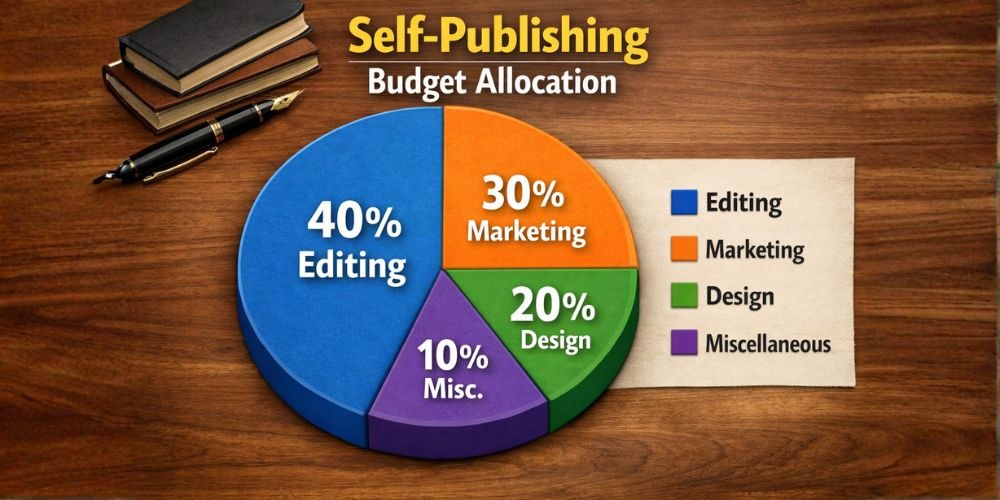
Let’s discuss realistic cost expectations.
Many beginners believe self-publishing is free. It can be — but professional quality is not.
Here’s a general cost breakdown:
- Editing: Moderate to High range
- Cover Design: Moderate range
- Formatting: Moderate range
- ISBN (if purchased)
- Marketing & Ads
If your goal is long-term author branding, view this as business investment.
Budget wisely. Prioritize editing and cover first.
8. Choosing the Right Publishing Platform
Where you publish matters.
Some authors choose:
- Platform-exclusive distribution
- Wide distribution strategy
Each has pros and cons.
Exclusive Publishing:
- Higher royalties (sometimes)
- Easier management
- Promotional benefits
Wide Distribution:
- More global reach
- Not dependent on one platform
- Multiple income streams
Your decision depends on:
- Your target audience
- Genre
- Long-term goals
9. Pricing Strategy: Psychology Behind Book Pricing
New authors often price too low or too high.
Consider:
- Genre standards
- Page count
- Competitor pricing
- Launch discounts
Low price can:
- Increase volume
- Build readership
- Generate reviews
Higher price can:
- Position as premium
- Increase perceived value
Test your pricing. Publishing is also business strategy.
10. Marketing Basics Every Author Must Know
Marketing does not begin after publishing. It begins months before launch.
This is one of the most important tips before self publishing a book.
Build Audience First
- Start social media presence
- Create author brand
- Start email list
- Share writing journey
- Connect with readers
Why Email List Matters
Social media platforms change algorithms. Email gives direct reader access. Even 500 loyal subscribers can transform your launch.
11. Author Branding: More Than Just a Logo
Branding means:
- Consistent author voice
- Recognizable theme
- Clear niche positioning
- Professional online presence
Ask:
- What do I want to be known for?
- What genre am I building long-term?
- What audience am I targeting?
Clarity increases visibility.
12. Pre-Launch Strategy
A strong launch can push your book higher in rankings.
Pre-Launch Checklist:
- Final edits complete
- Cover ready
- Blurb optimized
- ARC copies sent
- Reviews lined up
- Social media announcements scheduled
- Email sequence planned
ARC (Advance Review Copy) readers are powerful. Reviews influence buying decisions heavily.
13. Writing a Powerful Book Description (Blurb)
Your blurb converts browsers into buyers.
A strong blurb:
- Starts with emotional hook
- Introduces core conflict
- Builds curiosity
- Ends with call to action
Avoid summary. Sell emotion.
14. Importance of Reviews
Reviews build social proof.
How to get them:
- ARC readers
- Email subscribers
- Honest reader requests
- Book communities
Never buy fake reviews. Long-term damage is severe.
15. Understanding Royalties and Taxes
When you self publish a book, you become a small business owner.
Understand:
- Royalty percentage
- Payment cycles
- Tax deductions
- Record keeping
Keep invoices of: Editing, Design, Marketing. It may help reduce tax liability.
16. Post-Publishing Strategy
Publication day is not the finish line.
Continue:
- Marketing campaigns
- Content creation
- Reader engagement
- Book promotions
- Gathering feedback
Books sell longer when consistently marketed.
17. Managing Expectations as a First-Time Author
Reality check:
- First book rarely becomes instant bestseller.
- Growth takes time.
- Audience builds gradually.
Focus on: Consistency, Quality, Learning, Improvement. Publishing is marathon, not sprint.
18. Emotional Preparation Before Publishing
Self-publishing is emotional.
You may face:
- Negative reviews
- Low sales periods
- Self-doubt
- Comparison with others
Prepare mentally. Every successful author once started with zero readers.
19. Common Mistakes to Avoid
Here is an essential self publishing checklist to avoid major errors:
- Publishing without editing
- Using amateur cover
- Skipping formatting checks
- Ignoring marketing
- Pricing randomly
- Not building email list
- Giving up too early
Avoiding these mistakes increases your success probability dramatically.
20. Should You Self Publish a Book?
Ask yourself:
- Do I want full control?
- Am I ready to invest time and money?
- Can I handle marketing?
- Am I willing to learn continuously?
If yes — self-publishing can be powerful.
It allows: Creative independence, Higher royalty potential, Faster publishing timeline, Direct reader relationship.
Final Thoughts: Your Journey Starts Here
Self-publishing is an exciting opportunity for modern authors. It democratizes literature and gives creators power.
But success does not come from simply uploading a manuscript. It comes from:
- Careful manuscript readiness
- Professional editing
- Quality cover design
- Strategic marketing
- Long-term vision
- Smart self publishing tips implementation
If you follow this first time author guide carefully and complete every step in your self publishing preparation steps, you dramatically increase your chances of success.
Publishing a book is not just about printing pages. It is about building an author brand, creating reader trust, and delivering lasting value.
At Adhipati Creations, we believe every great book deserves professional presentation and strong strategy. Take your time. Prepare wisely. Publish confidently. Your author journey begins with the right foundation.
“Publishing a book is not just about printing pages. It is about building an author brand, creating reader trust, and delivering lasting value.”
✅ Ready to turn your manuscript into a professional book?
Don't get lost in the confusion of the publishing world. Contact Adhipati Creations today for a free consultation. Let’s discuss your manuscript, your goals, and how we can help you become a published author with full pride and profit.